$26k Yamaha Grant · Junior Capstone · Spring 2025
Solar Boat
What it is
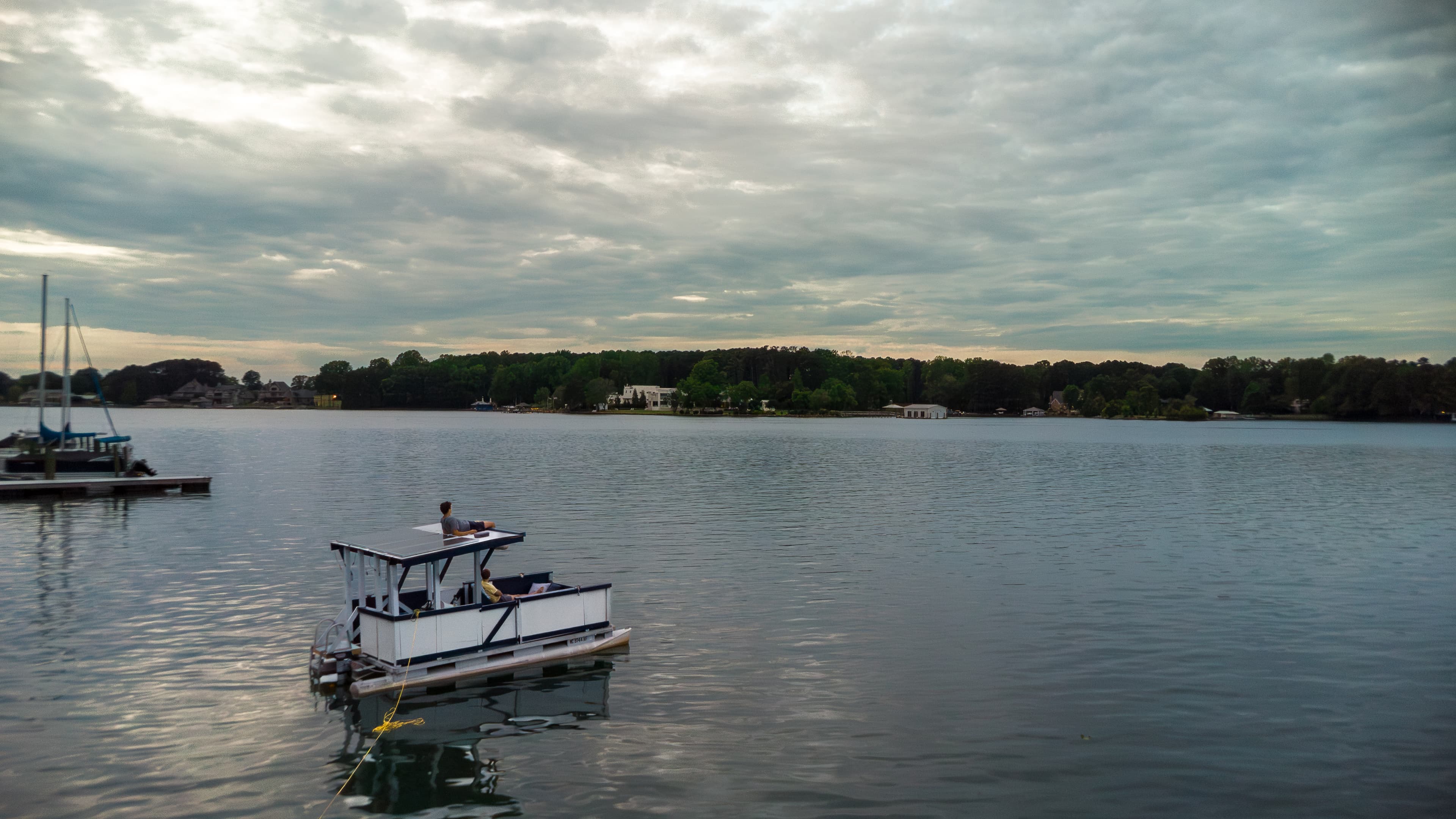
Boating accounts for roughly 3% of global greenhouse emissions. Electric boats exist but the technology is expensive and largely out of reach for recreational use. Phillip Mann and I wanted to know if two physics students with limited funding and a beat-up pontoon hull could change that, at least at small scale.
The answer was yes... eventually. We spent a semester converting a 1970s Davidson College pontoon boat into a fully solar-powered vessel: three 200W solar panels charging a pair of 48V Torqeedo batteries, driving a Cruise 6.0 RS electric outboard motor. The boat floats, drives, and runs entirely on sunlight.
How we made it happen
We had an idea and almost nothing else. No budget, no boat, no motor.
Getting a worksite meant cold-emailing the Lake Campus director, who told us there were two abandoned pontoon hulls in the boatyard we could use. Getting a motor meant writing personalized sponsorship pitches to every electric marine company we could find. Nine companies didn't respond. Yamaha did. They had just launched their RightWaters sustainability campaign and recently acquired Torqeedo, a German electric outboard manufacturer. We got on a Zoom call. They liked the project. They sent us a $14,000 motor.
The physics department funded the solar panels. The college sustainability office added another $1,500. We started the semester with enough to build.
Building it
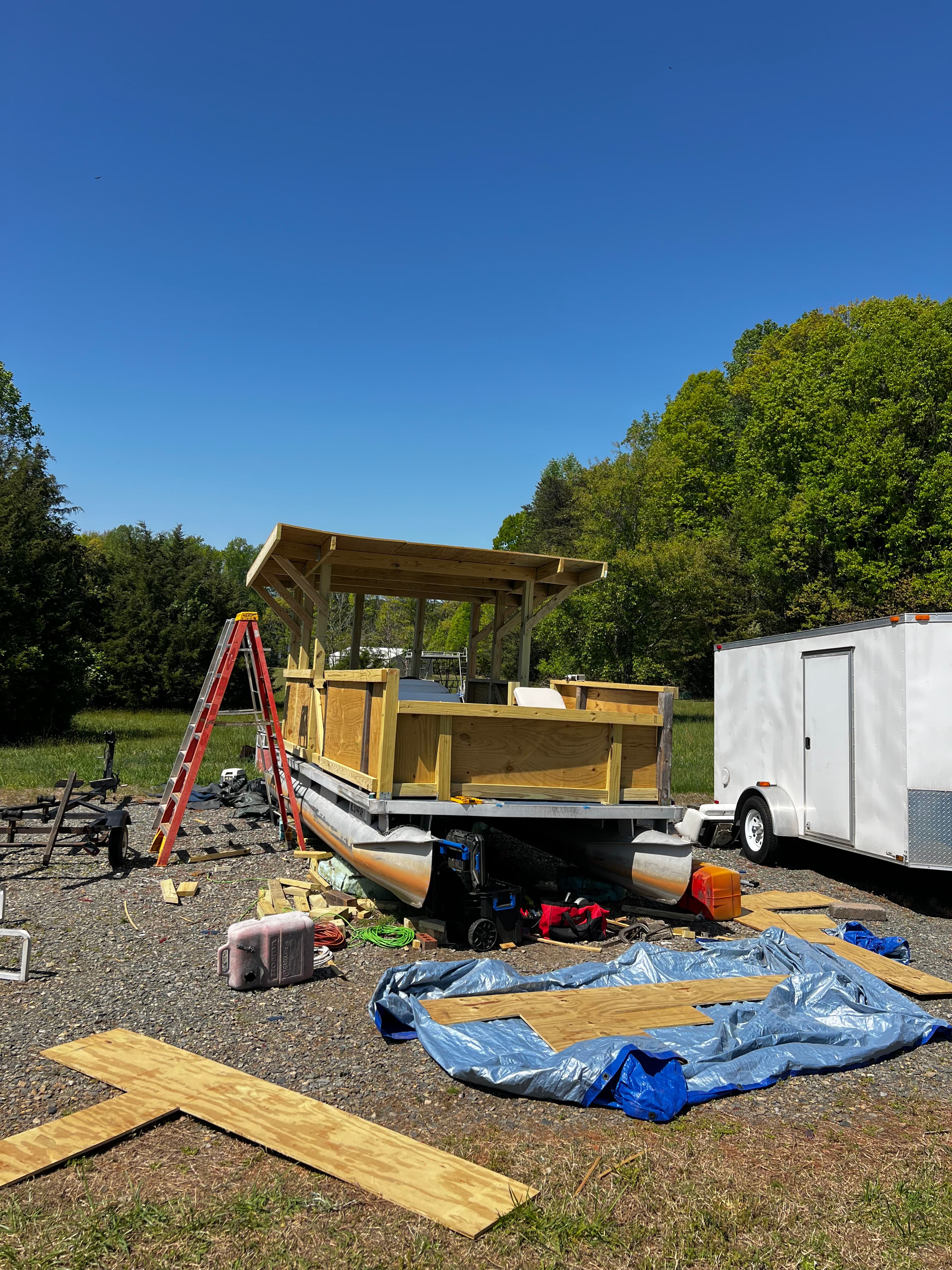
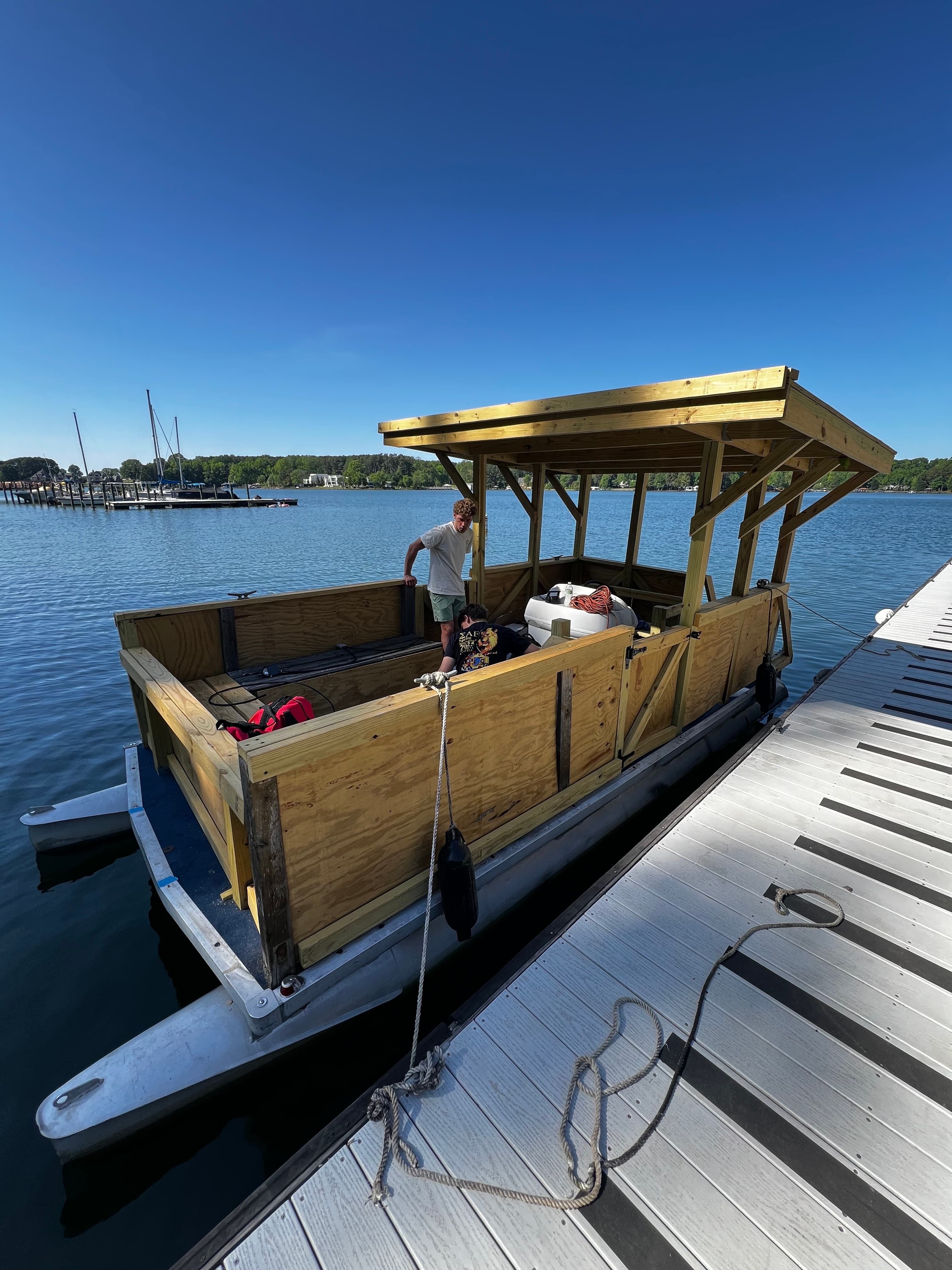
The boat hadn't been in the water in over a decade. We spent the first weeks tearing it down — rusted bolts, rotting carpet, a dead gas motor. Then rebuilt from the floor up: new carpet, benches, plywood walls, roof structure, a back deck, ladder, cleats, and a captain's chair.
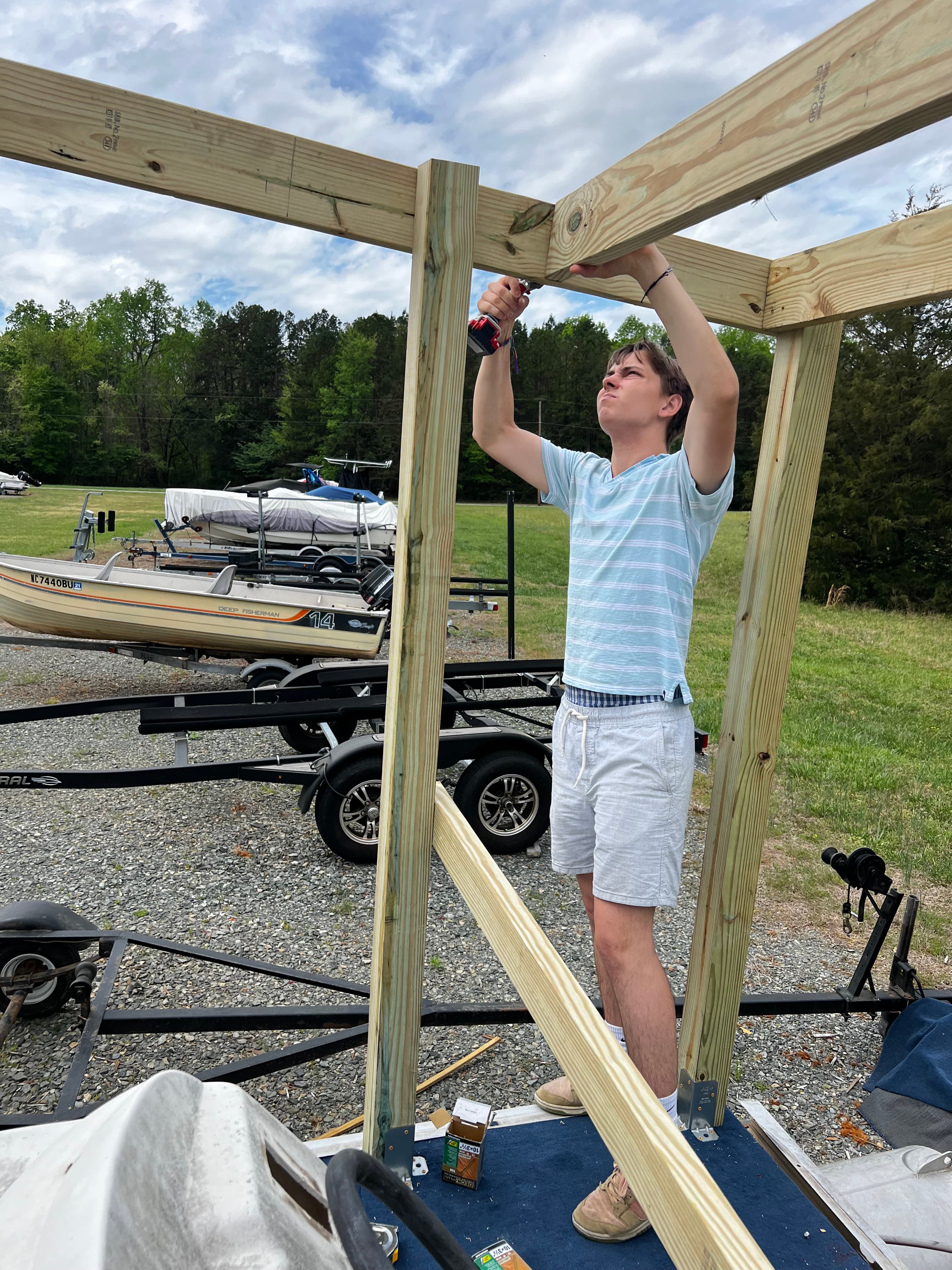
The roof was the structural centerpiece. It needed to hold three solar panels and double as a lounge area people could actually sit on, so it had to be over-engineered. We extended it a foot and a half past the boat's footprint on each side to maximize panel coverage, which required some interesting carpentry at the corners to keep it from racking.
The electrical system ran three Renogy 200W panels through a Torqeedo solar charge controller into two 48V batteries wired in parallel, powering the outboard motor. A separate 12V system ran lights, speakers, and a horn.
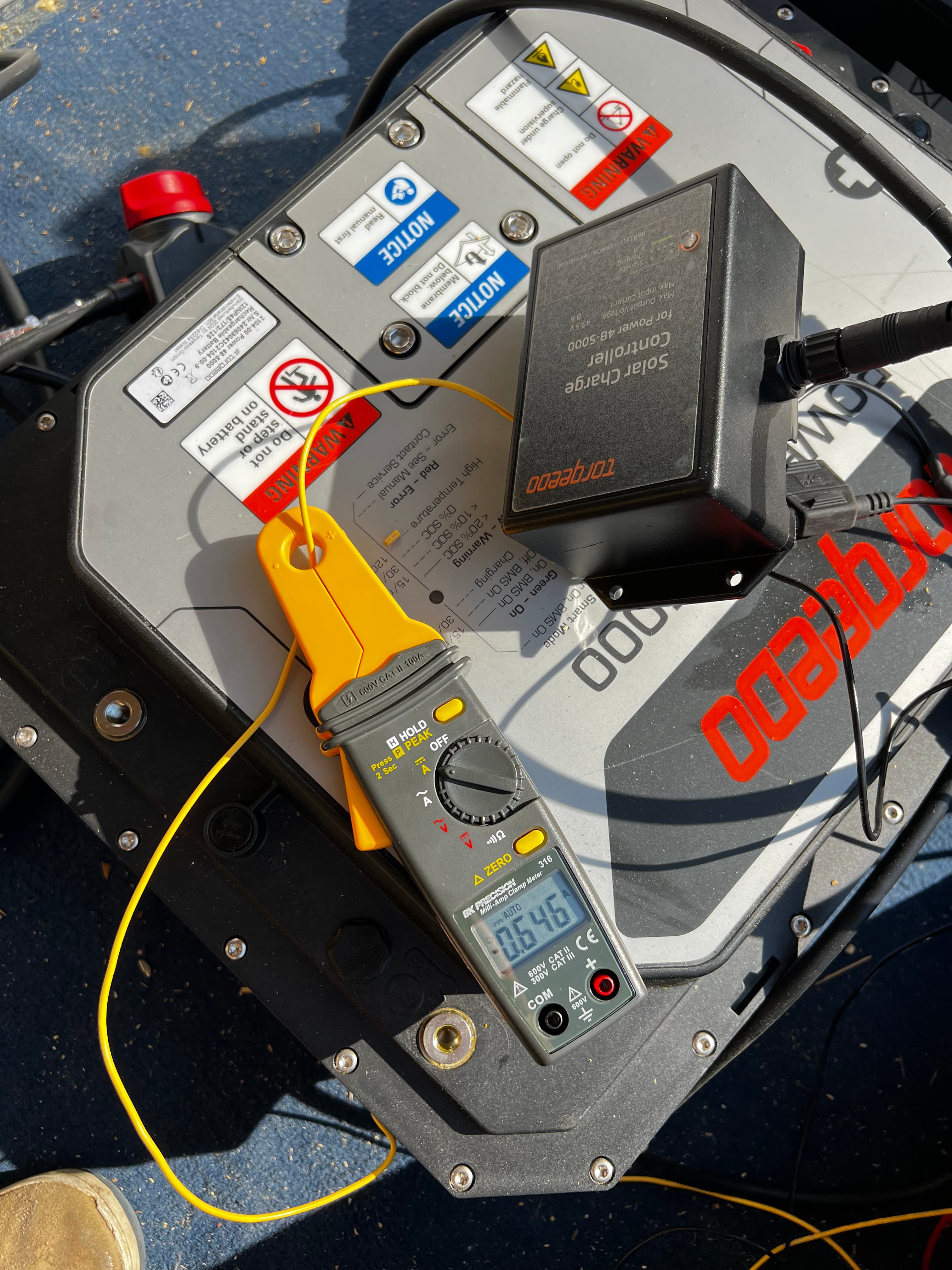
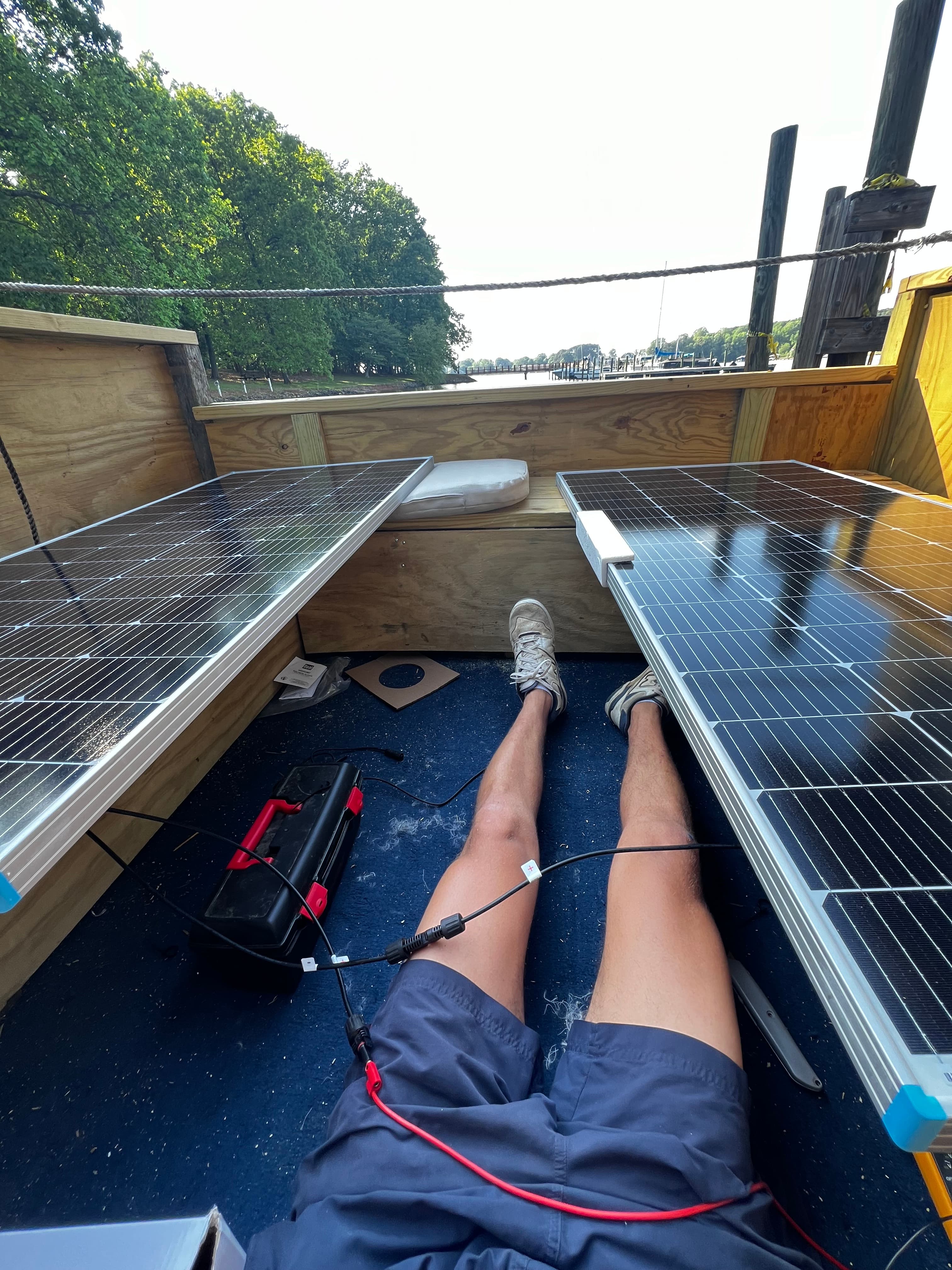
First time the motor ran.
What went wrong
The day before the symposium, we connected the third solar panel to the charge controller. Two panels had worked fine. Three panels pushed the input voltage to ~60V, which is above what the charge controller could handle. It fried one battery completely. The other threw a permanent fault code. We presented the next morning anyway, running on wall power.
Yamaha sent us new batteries.
The speaker system also died during final wiring. Running cables under a wet boat created a short we couldn't trace. We replaced everything under warranty.
What came of it
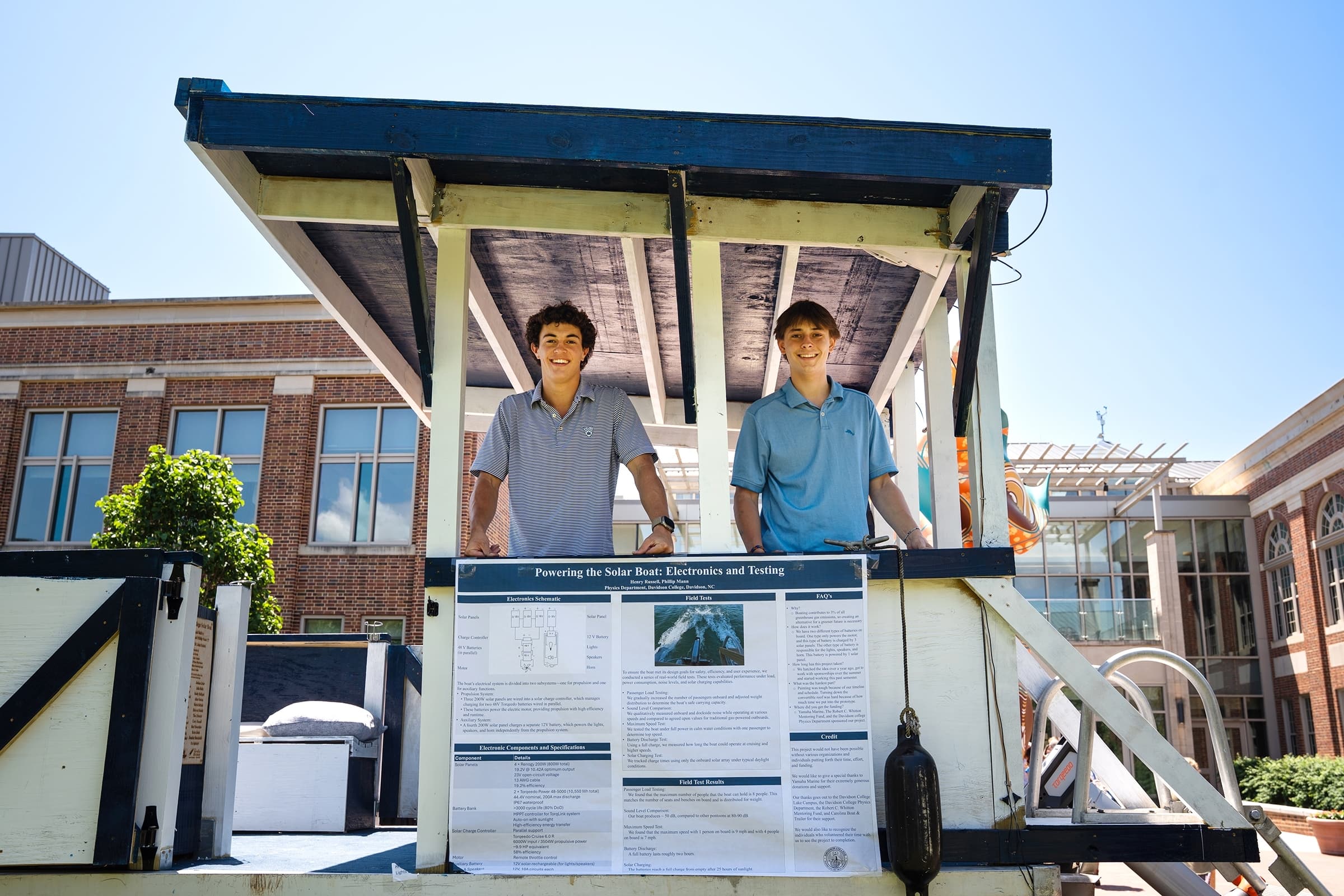
Top speed of 7mph with 4 people on board. Yamaha published a feature on the project for their RightWaters campaign. We presented at Davidson's Verna Miller Case Symposium to faculty, peers, and industry sponsors. The boat is still at the lake.